Blog
Choosing the right B2B email list provider isn’t as simple as finding the platform with the biggest database. Every business has different goals, budgets, and sales processes, which means the best solution for one company may not be the right fit for another.
Some providers focus on enterprise sales intelligence, while others specialise in verified contact databases, email verification, or pay-as-you-go lead generation. There are also platforms that combine prospecting tools, CRM integrations, and outreach features into a single solution. Understanding these differences can help you invest in a provider that matches the way your team works.
To make your decision easier, we’ve compared nine of the best B2B email list providers in 2026. Instead of declaring a single winner, we’ve looked at where each platform performs well, who it’s best suited for, how it is priced, and the advantages and limitations you should know before signing up.
Best B2B Email List Providers Compared
Every provider in this list serves a slightly different purpose. Some are designed for businesses that need a one-time purchase of targeted email lists, while others are complete sales intelligence platforms built for teams that prospect every day.
The table below gives you a quick overview before we look at each provider in more detail.
| Provider | Best For | Pricing Model |
| EmailProLeads | One-time targeted B2B email lists | Custom pricing |
| BookYourData | Pay-as-you-go verified contacts | Credit-based |
| Cognism | European B2B prospecting | Custom pricing |
| ZoomInfo | Enterprise sales intelligence | Custom pricing |
| Apollo | Sales prospecting and outreach | Subscription |
| UpLead | Verified business contacts | Subscription |
| Lead411 | Intent data and SMB sales teams | Subscription |
| Hunter | Email finding and verification | Freemium + paid plans |
| Data Axle | Business and consumer databases | Custom pricing |
How We Chose These Best B2B Email List Providers
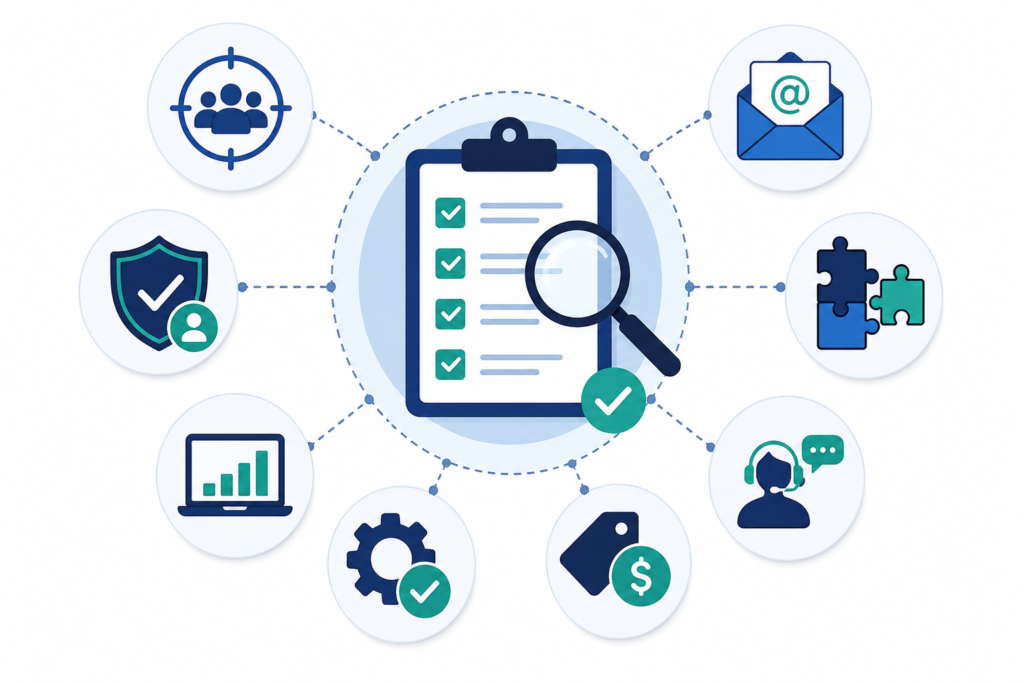
There are dozens of companies selling business contact data, but not all of them offer the same level of quality or value. Some focus on verified email databases, while others provide complete sales engagement platforms with prospecting, automation, and CRM integrations.
For this comparison, we looked at several factors that matter most to businesses buying B2B email lists. These include data quality, verification methods, filtering options, ease of use, pricing, industry reputation, and the type of businesses each platform serves. We also considered whether a provider is better suited for occasional list purchases or ongoing sales prospecting.
Rather than ranking providers from best to worst, we’ve highlighted the situations where each platform performs well. That way, you can choose the option that fits your business instead of paying for features you may never use.
1. EmailProLeads
Best for: Businesses looking for targeted best b2b email list providers without paying for a monthly subscription.
Disclosure: EmailProLeads is our own platform. We’ve included it in this comparison alongside other leading providers so you can compare its features, pricing model, and use cases with the rest of the market.
Unlike many sales intelligence platforms that require ongoing subscriptions, EmailProLeads focuses on delivering customized B2B email databases based on your specific targeting requirements. Businesses can purchase lists by industry, country, job title, company size, or other filters without committing to recurring monthly fees.
This approach works well for companies that run occasional outreach campaigns, agencies managing client projects, recruiters, event organisers, and businesses that simply need accurate prospect data rather than a complete sales engagement platform.
Since the lists are customised, buyers only pay for the contacts they actually need instead of purchasing access to a large database they may never fully use.
Pricing
EmailProLeads provides customized pricing based on your targeting requirements, including industry, geography, job title, company size, and the number of records requested.
Pros
- No monthly or annual subscription required.
- Custom email lists built around your targeting criteria.
- Suitable for businesses that only purchase data when needed.
Cons
- Does not include built-in CRM, sales automation, or email sequencing tools.
2. BookYourData
Best for: Businesses that prefer buying verified contacts on demand.
BookYourData has become a popular choice for businesses that don’t want to commit to long-term subscriptions. Instead of paying a monthly fee, customers purchase credits and use them whenever they need new business contacts.
The platform allows users to filter prospects by industry, company size, revenue, location, employee count, job title, and many other criteria. One of its biggest strengths is that email addresses are verified before export, helping reduce the number of invalid contacts downloaded by customers.
This flexible pricing model makes BookYourData attractive for consultants, agencies, startups, and businesses running occasional lead generation campaigns.
Pricing
BookYourData follows a credit-based pricing model. Plans start at approximately $99 for 250 contacts, with larger credit packages reducing the cost per contact. Unused credits do not expire.
Pros
- No long-term contracts.
- Real-time email verification before export.
- Flexible purchasing model for occasional users.
Cons
- Large-scale prospecting can become more expensive than subscription platforms.
3. Cognism
Best for: Companies targeting European markets with a strong focus on compliance.
Cognism is widely recognised for its strong coverage across Europe and its emphasis on compliant B2B prospecting. Many sales teams choose the platform because it combines business contact data with sales intelligence features, CRM integrations, intent signals, and verified mobile numbers.
The platform is particularly popular among medium-sized businesses and enterprise organisations with outbound sales teams working across the UK and European markets.
While Cognism offers powerful prospecting capabilities, it is generally designed for businesses with larger sales operations rather than companies looking for occasional one-time list purchases.
Pricing
Cognism does not publish standard pricing on its website. Businesses need to request a customized quote based on their team size and requirements.
Pros
- Strong coverage of European business contacts.
- Good reputation for GDPR-focused prospecting.
- Includes sales intelligence features beyond contact data.
Cons
- Custom pricing may be expensive for smaller businesses..
4. ZoomInfo
Best for: Large enterprises that need advanced sales intelligence and account-based prospecting.
ZoomInfo is one of the biggest names in the B2B data industry. Rather than simply providing email lists, it offers a complete sales intelligence platform with company data, buyer intent signals, organisational charts, CRM integrations, conversation intelligence, and workflow automation.
The platform is designed for organisations with dedicated sales teams that rely on outbound prospecting every day. Its extensive database and advanced filtering options make it a popular choice among enterprise businesses, especially those running account-based marketing campaigns.
While ZoomInfo offers one of the most feature-rich platforms available, its pricing and contract structure make it difficult to justify for smaller businesses or companies that only need contact data occasionally.
Pricing
ZoomInfo does not publish its pricing publicly. Businesses need to contact the sales team for a customized quote. Industry estimates suggest that plans typically start at around $15,000 per year and increase depending on the number of users, credits, and additional products required.
Pros
- Extensive B2B contact and company database.
- Advanced buyer intent data and account insights.
- Deep integrations with major CRM and sales platforms.
Cons
- Expensive for startups and small businesses.
- Annual contracts and custom pricing reduce flexibility.
5. Apollo
Best for: Small and medium-sized businesses looking for an all-in-one prospecting platform.
Apollo combines a large B2B contact database with outreach tools, email sequencing, CRM integrations, meeting scheduling, and analytics. Instead of switching between several different applications, users can manage much of their outbound sales process from a single platform.
One of Apollo’s biggest advantages is its transparent pricing. Unlike many enterprise competitors, businesses can sign up online, choose a plan, and start prospecting without speaking to a sales representative. It also offers a free plan, making it accessible to startups and growing sales teams.
Pricing
Apollo offers a free plan with limited credits. Paid plans start at $49 per user per month (billed annually), with Professional and Organisation plans available for larger teams.
Pros
- Free plan available.
- Combines prospecting, outreach, and CRM integrations.
- Transparent pricing with self-service sign-up.
Cons
- Heavy users may need additional credits, increasing overall costs.
6. UpLead
Best for: Businesses that prioritise verified business contact data.
UpLead focuses on providing verified B2B contacts rather than building an all-in-one sales platform. One feature that sets it apart is real-time email verification before contacts are exported, helping users reduce bounce rates and improve campaign performance.
The platform also includes advanced search filters, technographic data, CRM integrations, buyer intent data, and data enrichment features. Its straightforward pricing makes it attractive for businesses that want predictable monthly costs without negotiating enterprise contracts.
Pricing
UpLead offers a free trial with limited credits. Paid plans start at $99 per month, while larger plans provide additional credits and advanced features. Annual billing reduces the monthly cost.
Pros
- Real-time email verification before export.
- Transparent pricing with no mandatory enterprise contract.
- Easy-to-use search filters and CRM integrations.
Cons
- Monthly credit limits may not suit very large outbound teams.
7. Lead411
Best for: Growing sales teams looking for intent data without enterprise pricing.
Lead411 combines business contact data with buyer intent signals, company insights, and sales triggers. It helps sales teams identify organisations that may already be researching products or services similar to theirs.
Compared with some enterprise competitors, Lead411 offers more transparent pricing and lower entry costs, making it an attractive option for growing businesses that need more than basic contact information without investing in premium enterprise platforms.
Pricing
Lead411 offers a free trial, with paid plans starting at around $49 per month. Higher plans include additional exports, intent data, and advanced prospecting features.
Pros
- Includes buyer intent data.
- More affordable than many enterprise alternatives.
- Good balance between pricing and functionality.
Cons
- International coverage is generally not as extensive as some larger competitors.
8. Hunter
Best for: Finding and verifying professional email addresses.
Hunter isn’t a traditional email list provider. Instead, it specialises in helping users discover professional email addresses associated with company domains. It also includes email verification, domain search, bulk search, and cold email campaign tools.
The platform is particularly useful for sales representatives, recruiters, journalists, and marketers who need to find individual contacts rather than purchasing large business databases.
If your goal is building highly targeted prospect lists one company at a time, Hunter can be an effective solution. However, businesses looking for ready-made B2B databases may find other providers more suitable.
Pricing
Hunter offers a free plan with limited monthly searches. Paid plans start at $49 per month, with larger plans available for teams requiring additional searches and verification credits.
Pros
- Excellent for finding professional email addresses.
- Built-in email verification tools.
- Free plan available for occasional users.
Cons
- Not designed for purchasing large, ready-made B2B email lists.
9. Data Axle
Best for: Businesses that need large business and consumer marketing databases.
Data Axle has been providing marketing data for decades and offers one of the broadest databases in the industry. In addition to business contacts, it also provides consumer data, firmographic information, location intelligence, and marketing services.
Its solutions are commonly used by businesses running large direct marketing campaigns, local advertising initiatives, and database-driven prospecting projects.
Because the platform focuses on customized data solutions, pricing varies depending on the type of database, filters, and licensing requirements.
Pricing
Data Axle provides customized pricing based on the type of data, licensing requirements, and project size. Businesses need to request a quote for accurate pricing.
Pros
- Extensive business and consumer databases.
- Suitable for large marketing campaigns.
- Offers customised data solutions for different industries.
Cons
- Custom pricing makes it difficult to estimate costs before contacting the sales team.
B2B Email List Providers Compared
Choosing the right b2b email list providers isn’t just about the size of the database. Pricing models, verification methods, compliance practices, and available features vary significantly from one platform to another. Some providers specialise in one-time list purchases, while others offer complete sales intelligence platforms with CRM integrations, buyer intent data, and outreach tools.
The comparison below highlights the main differences to help you narrow your options.
| Provider | Best For | Pricing Model | Email Verification | GDPR Support | Entry Cost |
| EmailProLeads | One-time targeted email lists | Custom quote | Yes | Available for business data | Custom |
| BookYourData | Pay-as-you-go contacts | Credit-based | Real-time verification | Yes | From around $99 |
| Cognism | European prospecting | Custom quote | Yes | Strong GDPR focus | Quote required |
| ZoomInfo | Enterprise sales intelligence | Annual contract | Yes | Available | Quote required |
| Apollo | Prospecting and outreach | Monthly subscription | Yes | Available | Free plan, paid from $49/user |
| UpLead | Verified B2B contacts | Monthly subscription | Real-time verification | Available | From $99/month |
| Lead411 | Intent data | Monthly subscription | Yes | Available | From $49/month |
| Hunter | Email finding | Freemium | Yes | Available | Free plan |
| Data Axle | Business databases | Custom quote | Yes | Available | Quote required |
Is Buying B2B Email Lists Dead in 2026?
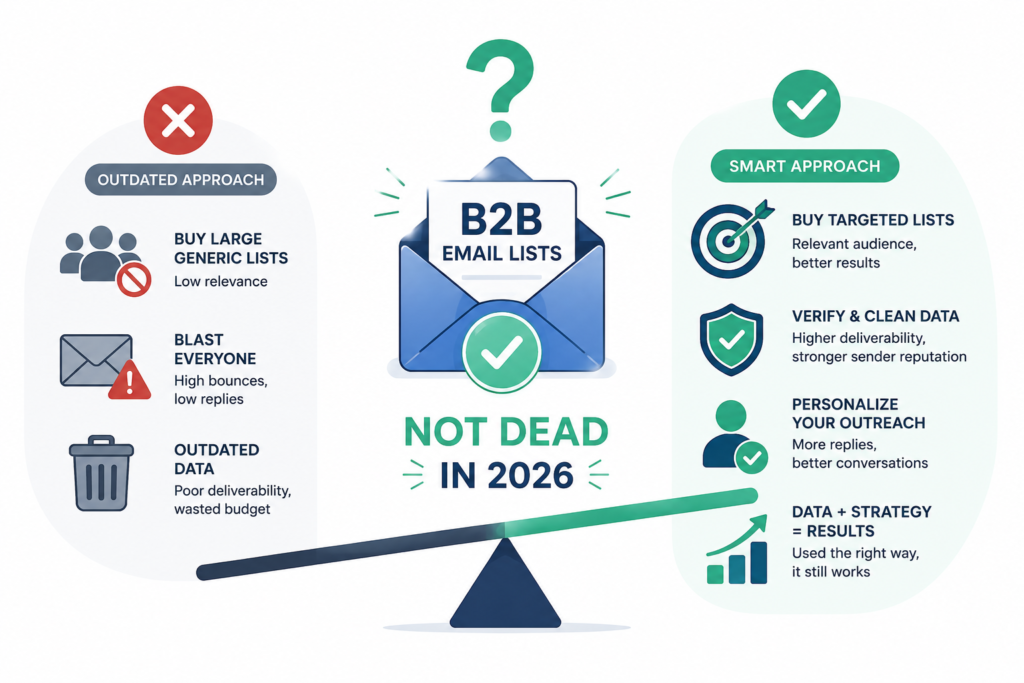
This question comes up regularly in marketing communities, and the short answer is no. However, the way businesses buy and use email lists has changed significantly.
A few years ago, many companies purchased large generic databases and sent the same email to thousands of contacts. Today, that approach rarely delivers good results. Poor targeting, outdated data, and stricter spam filtering have made mass email campaigns far less effective than they once were.
Instead, successful businesses focus on highly targeted databases that match a specific audience. They verify the data before sending, personalise their outreach, and contact smaller groups of prospects instead of blasting thousands of emails at once.
This shift is reflected in discussions across sales and marketing communities. Many professionals say purchased lists can still work when they’re highly targeted and properly verified, but they perform best as part of a broader outbound strategy rather than as the only source of leads. Others prefer building lists through LinkedIn, enrichment tools, and manual research, especially for high-value accounts.
The takeaway is simple. Buying a B2B email list isn’t outdated, but buying an old, generic database and expecting instant results usually is.
Is It Legal to Buy B2B Email Lists?
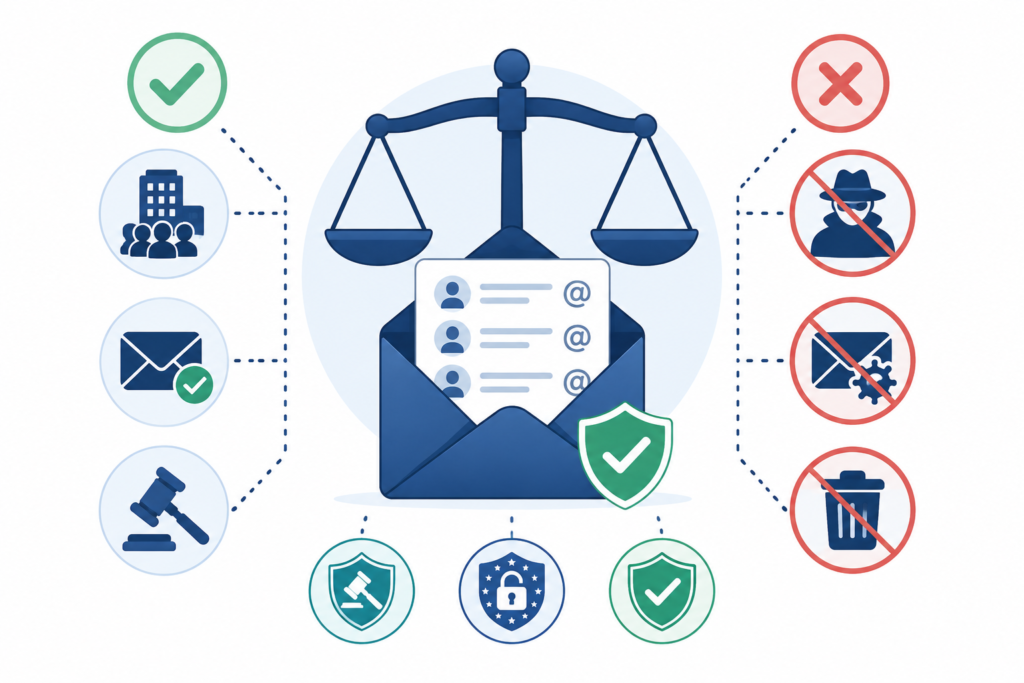
Buying a B2B email list is legal in many countries, but how you use that data is what matters most.
For businesses targeting the United States, the CAN-SPAM Act allows commercial email as long as you follow its requirements, including accurate sender information, a clear unsubscribe option, and truthful subject lines. Businesses targeting Europe need to consider GDPR requirements, including having an appropriate legal basis for processing personal data. Other regions, such as Canada, have stricter consent requirements under CASL.
Before purchasing a database, ask the provider how the data was collected and whether they can explain their compliance practices. Understanding where the data comes from is just as important as verifying the email addresses themselves.
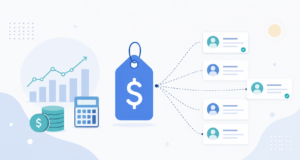
How Much Do B2B Email Lists Cost?
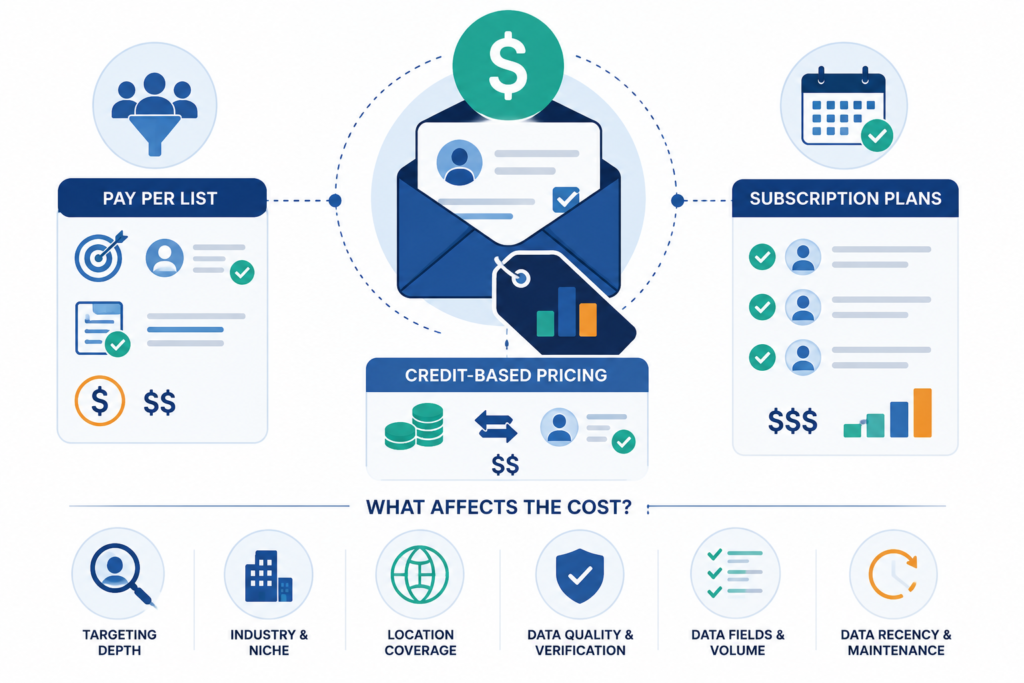
There isn’t a single price for B2B email lists because costs depend on several factors.
A broad database covering general business contacts will usually cost less than a highly targeted list filtered by industry, job title, company size, revenue, and location. Verification standards also affect pricing, as providers that regularly maintain and validate their databases invest more resources in keeping the data current.
In general, you’ll see three common pricing models.
Pay Per List
You purchase a customized database based on your targeting requirements. This model works well for businesses that only need contact data occasionally and don’t want a recurring subscription.
Credit-Based Pricing
Some providers let you purchase credits that are exchanged for contact records. Credits can usually be used whenever new leads are needed.
Monthly or Annual Subscription
Sales intelligence platforms typically charge recurring subscription fees. These plans often include CRM integrations, buyer intent data, outreach tools, and ongoing access to their databases.
How to Test a Provider Before Committing
Signing a long-term contract without evaluating the quality of the data can become an expensive mistake. Fortunately, there are several simple ways to assess a provider before making a larger investment.
Request a Sample List
A sample allows you to review the quality of the data before purchasing. Check whether the records match your target audience and include complete business information.
Start With a Small Purchase
Instead of buying thousands of contacts immediately, begin with a smaller list. This allows you to measure bounce rates, reply rates, and overall campaign performance before increasing your investment.
Verify the Data Independently
Even if a provider says the list has already been verified, running your own verification before sending emails provides an extra layer of protection for your sender reputation.
Compare Customer Support
Reliable providers should answer questions about data sources, verification methods, replacement policies, and targeting options without hesitation.
Review Their Replacement Policy
Business data changes every day. A provider that offers a clear replacement policy demonstrates confidence in the quality of its database and provides additional peace of mind if invalid records are discovered.
Final Thoughts
There isn’t a single B2B email list provider that’s right for every business. The best choice depends on how often you prospect, the size of your sales team, your budget, and the type of data you need.
If you’re looking for a one-time purchase of targeted business contacts, a customised email list may be the most cost-effective option. If your team depends on continuous prospecting, sales intelligence platforms with built-in automation and CRM integrations may justify the higher investment.
Before making a decision, compare pricing, review the provider’s verification process, request a sample list, and start with a smaller purchase whenever possible. Taking the time to evaluate your options can help you choose a provider that delivers accurate data and supports better outreach results.
Frequently Asked Questions
Which B2B email list provider is best for small businesses?
Businesses with smaller budgets often prefer providers that offer flexible pricing instead of annual contracts. Options such as EmailProLeads, BookYourData, Apollo, Lead411, and Hunter are commonly considered because they have lower entry costs than enterprise-focused platforms.
Which provider is best for enterprise sales teams?
Enterprise organisations typically need more than contact data. Platforms such as ZoomInfo and Cognism provide advanced sales intelligence, buyer intent data, CRM integrations, and workflow automation that support larger outbound sales teams.
Which provider offers the most flexible pricing?
Credit-based providers and companies offering one-time list purchases usually provide the greatest flexibility. Businesses only pay for the contacts they need instead of committing to ongoing subscription fees.
Should I choose a database or a sales intelligence platform?
That depends on your workflow. If you only need verified contacts for occasional campaigns, a one-time email list may be enough. If your sales team prospects every day, a sales intelligence platform with CRM integrations and automation features may provide better long-term value.
Can I switch providers later?
Yes. Many businesses test several providers before deciding which one fits their workflow. Starting with smaller purchases or free trials makes it easier to compare data quality, usability, and overall value before making a larger commitment.