Blog
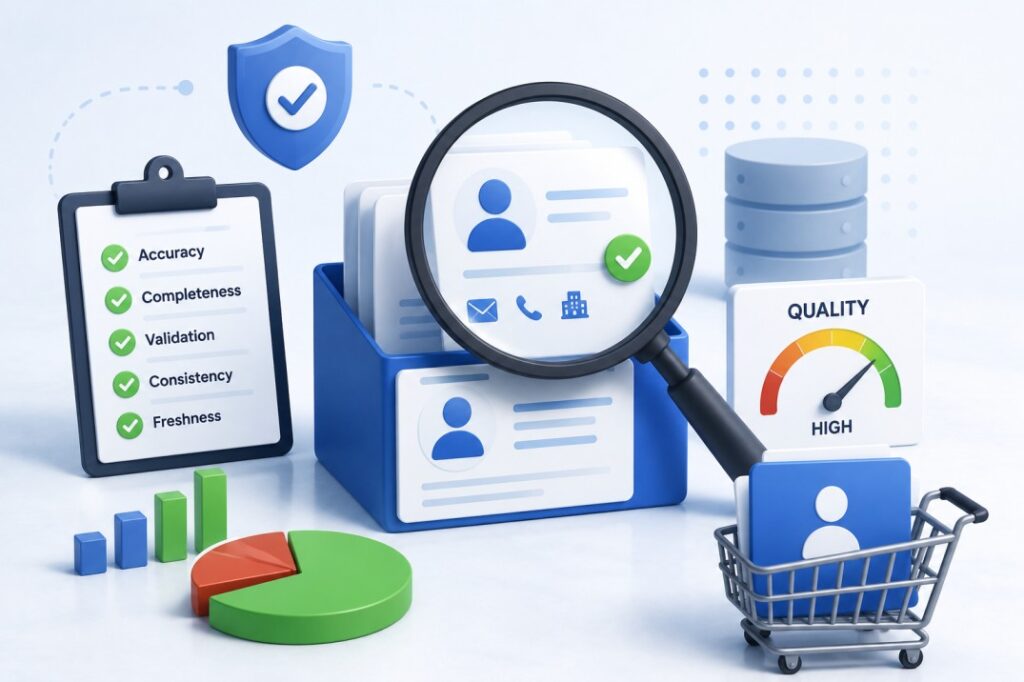
Buying contact data can save your team hours of research, but only if the information is accurate. A database filled with outdated email addresses, missing job titles, duplicate records, or irrelevant companies will do the opposite. It wastes your budget, increases bounce rates, and makes it harder to reach the right people.
Many buyers compare providers based on price or the number of contacts available. Those factors matter, but they don’t tell you whether the data is actually useful. A smaller, well-maintained database often delivers better results than a much larger list with poor-quality records.
Before you purchase a contact list, it’s worth understanding what contact data quality means and how to evaluate it. Asking the right questions before you buy can help you avoid poor data and choose a provider that fits your business needs.
In this guide, you’ll learn how to assess contact data quality, what warning signs to watch for, and the practical checks you can use before making a purchase.
What Is Contact Data Quality?
Contact data quality refers to how accurate, complete, relevant, and up to date a contact database is. High-quality data helps businesses reach the right people with the right information. Poor-quality data usually contains outdated contacts, missing details, duplicate records, or people who don’t match your target audience.
A reliable contact record should include information that allows your sales or marketing team to identify and contact the correct decision-maker without additional research.
A typical business contact record may include:
- Full name
- Business email address
- Job title
- Company name
- Industry
- Company website
- Business location
Some providers also include company size, employee count, annual revenue, LinkedIn profile, and department information to help businesses build more targeted prospect lists.
Why Contact Data Quality Matters
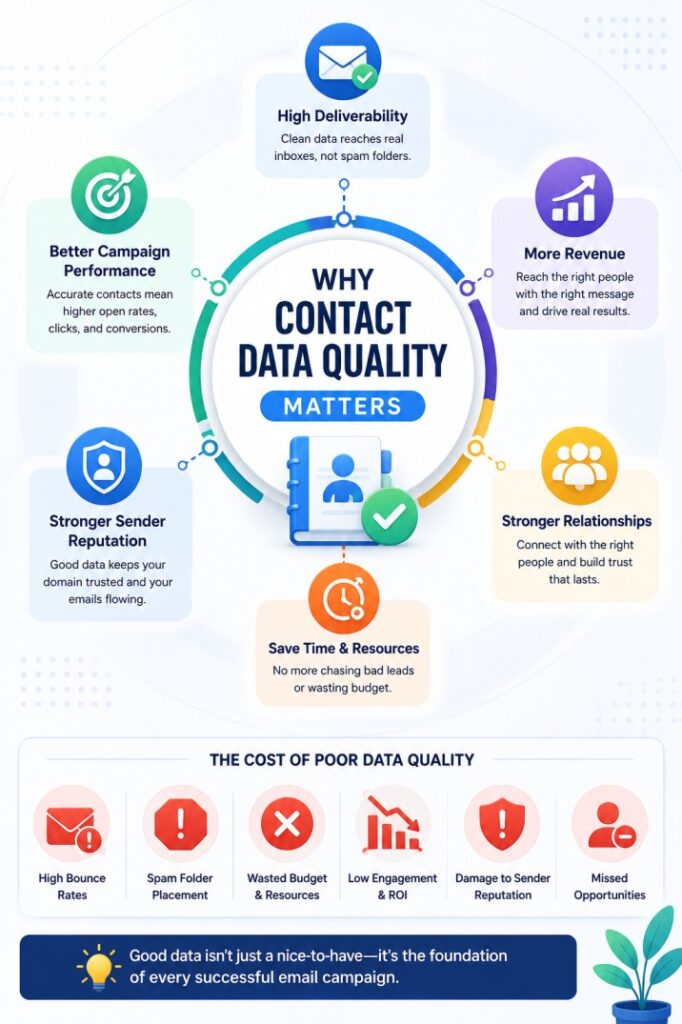
The quality of your contact data affects almost every stage of your outreach campaign.
If your database contains outdated or inaccurate information, your team spends more time researching contacts, following up with the wrong people, and managing bounced emails.
High-quality contact data helps businesses:
- Reach the right decision-makers.
- Reduce unnecessary email bounces.
- Build more targeted prospect lists.
- Improve campaign performance.
- Save time during prospecting.
- Make better use of sales and marketing budgets.
Buying contact data isn’t simply about getting more names. It’s about getting information that your team can actually use.
The Six Signs of High-Quality Contact Data
Before choosing a provider, check whether the database meets these six standards.
Accuracy
The information should correctly identify the person and the company they work for.
An accurate record includes a valid business email address, the correct company name, and an up-to-date job title. If these details are incorrect, the contact becomes much less valuable.
Completeness
A business email address alone rarely provides enough information for effective outreach.
Complete records usually include company details, job titles, locations, industries, and other fields that help you personalise your communication. The more complete the record, the easier it becomes to segment your audience.
Freshness
Business data changes constantly. Employees change jobs, companies merge, departments are reorganised, and email addresses become inactive.
Ask providers how often their database is reviewed and updated. Fresh data generally performs better than information that hasn’t been checked for months.
Relevance
Not every business contact is useful to your campaign. A good database should allow you to narrow your search using filters such as industry, company size, job title, country, or department. This helps you build a list that matches your ideal customer profile instead of sending emails to people who are unlikely to be interested.
Consistency
Records should follow the same format throughout the database. Company names, job titles, industries, and locations should be presented consistently. Inconsistent formatting can create problems when importing data into a CRM or organising campaign lists.
Uniqueness
Duplicate records create unnecessary work and can result in the same person receiving multiple emails.
A well-maintained database should identify and remove duplicate contacts before they are delivered to customers.
Contact Data Quality Checklist
Before buying a contact database, review the provider using this checklist.
| Check | Why It Matters |
| Business email addresses are verified | Helps reduce invalid contacts. |
| Job titles are current | Improves targeting. |
| Company names match the contact | Prevents inaccurate records. |
| Industry information is included | Supports audience segmentation. |
| Duplicate contacts are removed | Avoids repeated outreach. |
| Database is updated regularly | Helps keep records accurate. |
| Sample data is available | Allows you to review quality before buying. |
| Replacement policy is clearly explained | Provides confidence after purchase. |
This checklist won’t guarantee perfect data, but it will help you compare providers more effectively.
How to Evaluate Contact Data Before Buying
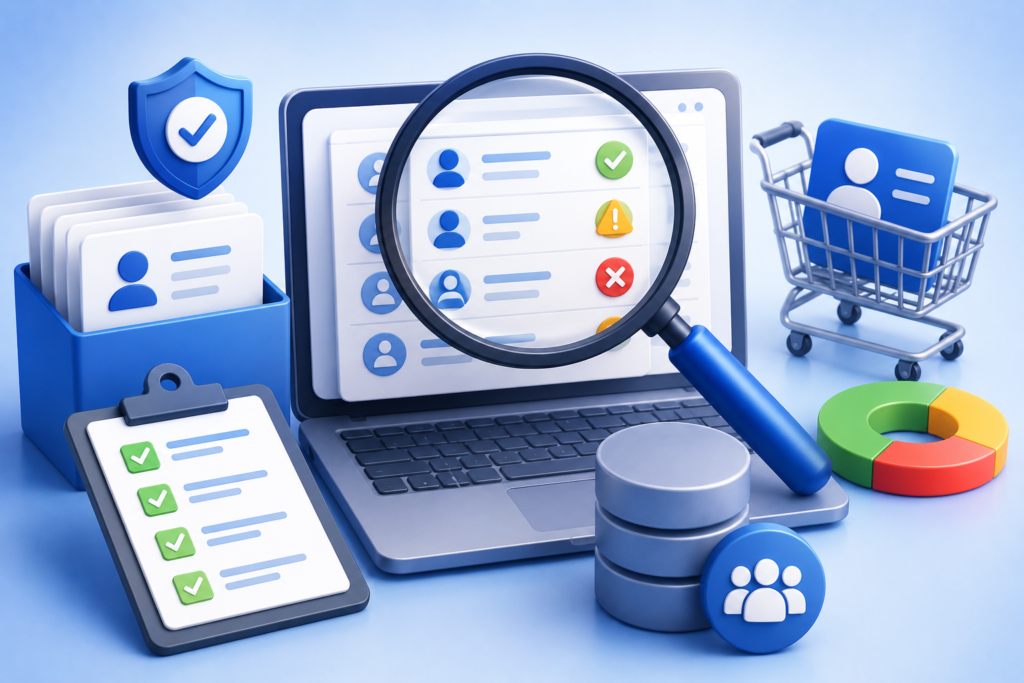
Choosing a provider shouldn’t be based on price alone. Taking a closer look at the data itself can prevent problems later.
Request a Sample
A reputable provider should be willing to share a sample of the data before you place an order. Review more than just the email addresses. Check the job titles, industries, company names, and locations to make sure the contacts match your target audience.
Review the Targeting Options
Good contact data isn’t only accurate. It should also be relevant.
Ask whether the provider allows you to filter contacts by:
- Industry
- Country
- Company size
- Employee count
- Revenue
- Department
- Job title
- Seniority level
Better targeting usually leads to more relevant prospect lists.
Ask How Often the Data Is Updated
Business information changes every day. Understanding how often the provider refreshes its database gives you a better idea of how current the records are. Some providers review their databases continuously, while others update them at scheduled intervals.
Understand the Verification Process
Ask how the provider checks business email addresses before delivering the data. A provider should be able to explain its verification process clearly rather than simply claiming the data is “verified.”
Check the Replacement Policy
Even carefully maintained databases can contain outdated contacts. Before buying, understand what happens if you identify invalid records. A clear replacement policy demonstrates that the provider stands behind the quality of its data.
10 Questions to Ask Before Buying Contact Data
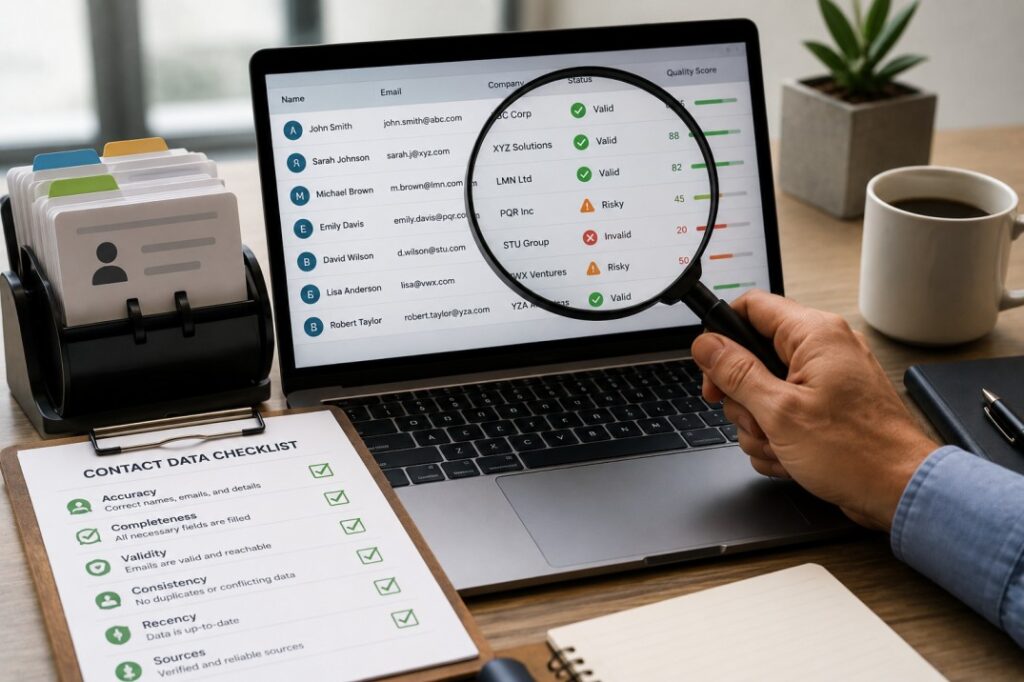
Before purchasing a contact database, ask a few practical questions instead of relying on marketing claims. The answers will tell you much more about the quality of the data than the size of the database.
1. When Was the Data Last Updated?
Business information changes regularly as people move to new roles or companies. Recent updates usually indicate fresher and more reliable records.
2. How Is the Contact Data Verified?
Ask the provider to explain its verification process.
A trustworthy provider should be able to describe how contact information is checked and how invalid records are removed instead of simply claiming the data is “verified.”
3. Can I Review a Sample Before Buying?
Reviewing a sample allows you to check whether the contacts match your target audience. Look at the quality of the job titles, industries, company names, and locations, not just the email addresses.
4. Can I Build a Custom Contact List?
Every business targets a different audience. Choose a provider that lets you filter contacts by industry, country, company size, department, job title, or other business criteria instead of offering only pre-built lists.
5. What Information Is Included?
Some providers only supply names and email addresses.
Others include additional details such as:
- Phone numbers
- LinkedIn profiles
- Company websites
- Employee count
- Revenue
- Industry
- Department
Complete records make prospecting much easier.
6. How Often Is the Database Refreshed?
Fresh data generally performs better than outdated records. Ask whether updates happen daily, weekly, monthly, or only when customers report errors.
7. Is There a Replacement Policy?
No database is perfect. A provider should explain what happens if you receive invalid or outdated records and whether replacements are available.
8. Can the Data Be Filtered by My Ideal Customer Profile?
The best contact database isn’t necessarily the largest one. It’s the one that helps you find businesses matching your ideal customer profile.
9. Are Duplicate Records Removed?
Duplicate contacts can affect reporting and create unnecessary follow-up work. Ask whether duplicate records are identified before delivery.
10. Is the Pricing Suitable for My Business?
Some providers require monthly subscriptions, while others offer one-time purchases.
Understanding the pricing model helps you choose a solution that fits both your outreach strategy and your budget.
Contact Data Quality Scorecard
Use this scorecard when comparing different providers.
| Evaluation Area | High-Quality Data | Poor-Quality Data |
| Contact Accuracy | Current business email and job title | Outdated or incorrect information |
| Completeness | Includes company details and useful business information | Missing important fields |
| Freshness | Updated regularly | Update schedule not explained |
| Targeting | Supports detailed business filters | Only broad lists available |
| Duplicate Records | Removed before delivery | Duplicate contacts present |
| Sample Availability | Sample shared before purchase | No sample available |
| Replacement Policy | Clearly explained | No replacement process |
If several boxes fall into the second column, it’s worth comparing another provider before making a purchase.
Common Red Flags Before Buying Contact Data
Not every provider follows the same standards. These warning signs may indicate lower-quality contact data.
Extremely Low Prices
If a database is significantly cheaper than every other option on the market, it’s worth asking why.
Very low prices can sometimes indicate outdated or recycled data.
No Sample Available
A provider that refuses to share sample records gives you no opportunity to review the quality before purchasing.
A small sample allows you to check whether the contacts match your requirements.
No Update Information
If the provider can’t explain when the database was last refreshed, it’s difficult to judge how current the information is.
Guaranteed 100% Accuracy
Business information changes every day.
No provider can honestly promise perfect accuracy because people change jobs, companies merge, and email addresses become inactive.
Be cautious of claims that sound too good to be true.
Limited Targeting Options
Receiving thousands of contacts doesn’t help if most of them don’t match your target audience.
Look for providers that support detailed business filters rather than offering only generic databases.
How Poor Contact Data Affects Campaign Performance
Poor-quality contact data affects more than just email campaigns.
Sales teams spend additional time researching contacts that should already be accurate.
Marketing teams may reach businesses that have no interest in their services.
Recruiters may contact people who no longer work for the company.
Event organisers may send invitations to the wrong decision-makers.
For email campaigns, poor contact data often leads to:
- Higher bounce rates
- Lower engagement
- More wasted outreach
- Less accurate reporting
- Reduced campaign efficiency
Starting with better contact data helps avoid many of these problems before the first email is sent.
How EmailProLeads Maintains Contact Data Quality
Contact data quality starts with understanding the audience a business wants to reach.
Instead of supplying one generic database for every customer, EmailProLeads provides customized B2B contact databases based on criteria such as industry, country, company size, department, and job title. This approach helps businesses receive contacts that are more relevant to their campaigns.
Businesses can also choose a one-time payment option, making it suitable for companies that need targeted contact data without committing to an ongoing subscription.
Before purchasing any contact database, it’s still a good idea to review a sample, understand the provider’s update process, and check the replacement policy. Taking these steps helps ensure the data matches your requirements and supports better campaign performance.
Final Thoughts
Choosing the right contact database isn’t about finding the biggest list. It’s about finding information that your business can actually use.
Before buying, take the time to review sample records, understand how the provider maintains its database, and compare more than just pricing. Looking at factors such as data freshness, completeness, targeting options, and replacement policies will give you a much clearer picture of overall contact data quality.
A reliable contact database should help your team spend less time researching prospects and more time building meaningful business relationships. Making a careful decision before you buy can save time, reduce wasted outreach, and support better results across your sales and marketing activities.
Frequently Asked Questions
What is contact data quality?
Contact data quality refers to how accurate, complete, relevant, consistent, and up to date your business contact information is. High-quality data helps businesses reach the right decision-makers, while poor-quality data often results in wasted outreach and lower campaign performance.
Why is contact data quality important?
Good contact data helps sales and marketing teams work more efficiently. Accurate records make it easier to identify the right prospects, personalise communication, and avoid spending time on outdated or irrelevant contacts.
How can I check contact data quality before buying?
Start by asking the provider for a sample. Review whether the contacts match your target audience, check if the records include complete business information, ask how often the database is updated, understand the verification process, and review the replacement policy before making a purchase.
What should a business contact record include?
A useful business contact record normally includes:
- Full name
- Business email address
- Job title
- Company name
- Industry
- Business location
- Company website
Some providers also include phone numbers, LinkedIn profiles, employee count, company revenue, and department details.
How often should contact data be updated?
Business information changes throughout the year as employees change jobs, companies expand, and organisations restructure. Providers should refresh their databases regularly and review records to help maintain contact data quality.
Can any provider guarantee 100% accurate contact data?
No. Business information changes constantly, so no provider can honestly promise perfect accuracy. Instead of looking for unrealistic guarantees, focus on providers that regularly update their data, explain their verification process, and offer a clear replacement policy.
Does better contact data improve email campaign performance?
Yes. Accurate contact data helps reduce invalid email addresses, improves audience targeting, and supports better campaign performance. While many factors influence email results, starting with relevant and up-to-date contact information gives your campaign a much stronger foundation.