Blog
Email list provider compliance is the part most buyers skip. Most CAN-SPAM problems with a purchased list don’t start with the law. They start with a provider who couldn’t answer basic questions about where the data came from, and a buyer who didn’t ask before hitting send.
CAN-SPAM doesn’t require a list provider to be “certified” or “approved” by any government body. There’s no official seal that makes a list legally safe to use. What actually protects you is knowing enough about how the list was built, maintained, and suppressed to make an informed decision, and being able to show that due diligence if a complaint ever comes up. That’s what email list provider compliance really means in practice: not a badge on a website, but a set of checks you run yourself.
This is the checklist to work through before you buy, not after your first campaign runs into trouble.
Why the Provider Matters More Than the Price
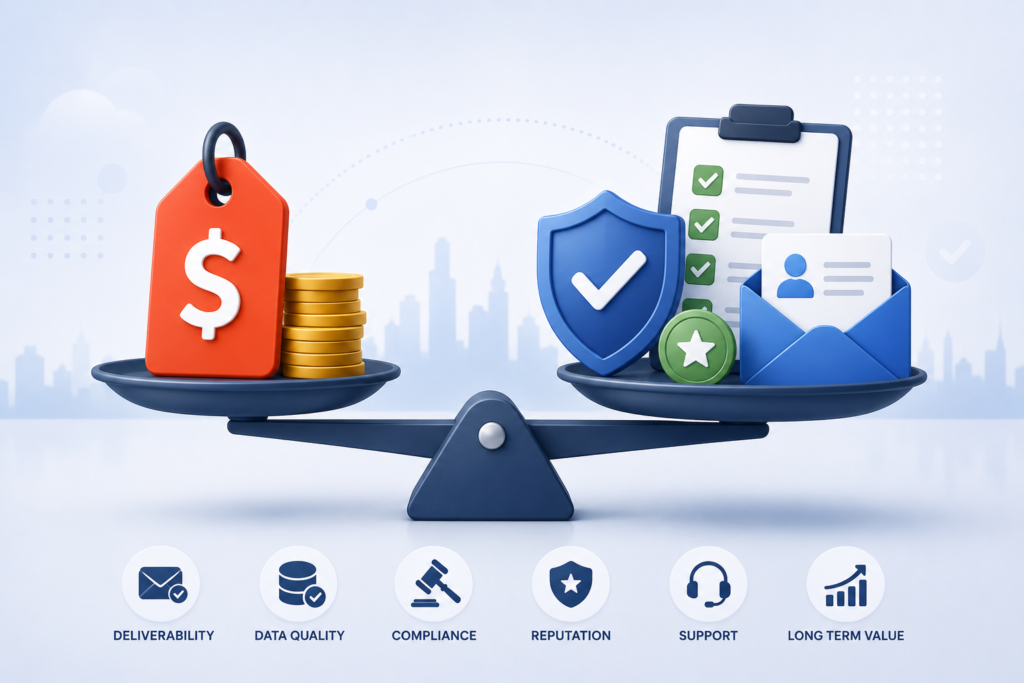
A cheap list and an expensive list can carry the exact same compliance risk if neither one comes with real documentation. The price tag tells you nothing about how the data was collected, how recently it was updated, or whether the addresses on it have already opted out of hearing from anyone.
What actually separates a safe purchase from a liability is whether the provider can answer four things clearly: where the data came from, how current it is, whether you can apply your own suppression list before delivery, and what you’re allowed to do with the data once you have it. Good email list provider compliance comes down to these four answers, not a claim on a landing page. If a provider can’t answer these without vague marketing language, that’s the signal to walk away, regardless of price or list size.
The Email List Provider Compliance Framework
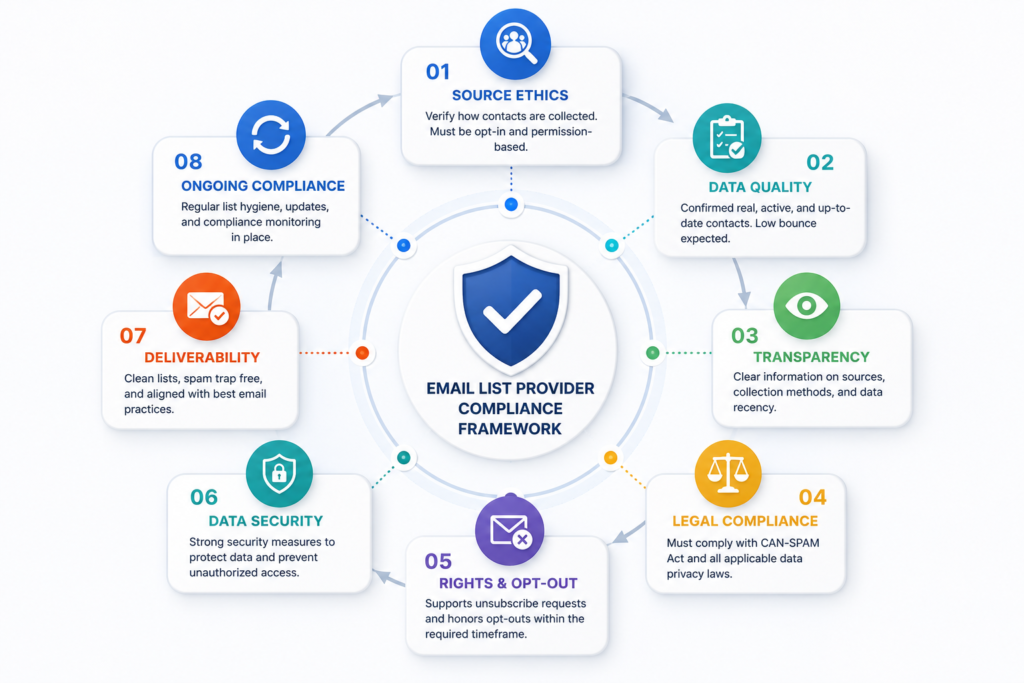
Break the evaluation into five areas. A provider that’s strong in one and weak in the rest is still a risky buy.
1. Data sourcing and consent
Ask directly how the addresses were collected. Reputable providers can describe their sources: public records, business directories, opt-in forms, licensed data partnerships, or self-reported submissions. Vague answers like “multiple trusted sources” without specifics are a warning sign.
For B2B lists, ask whether the data is compiled from public professional information or gathered through some form of consent. For consumer lists, ask specifically whether contacts opted in to marketing communications, since consumer campaigns tend to generate more spam complaints than B2B outreach.
2. Data freshness
Email data decays fast. Industry estimates put B2B contact decay at roughly 20 to 30 percent a year, since people change jobs, companies merge, and old addresses get abandoned. Ask when the records were last verified and how often the provider refreshes the database. A list verified within the last few months is reasonable. A list that hasn’t been touched in over a year is a liability no matter how large it is.
3. Suppression and opt-out support
This is the step most purchased-list campaigns skip, and it’s the one most likely to create an actual CAN-SPAM violation. Ask whether the provider can accept your internal do-not-email list and screen it against the file before delivery. Also ask how the provider itself handles opt-outs and complaints reported back to them, since a provider with no suppression process of their own is more likely to resell an address that already asked to be left alone.
4. Compliance documentation
Ask for the provider’s compliance posture directly instead of relying on a checkbox on their website. For U.S.-only B2B lists, this mostly means confirming they can speak clearly to CAN-SPAM’s sourcing and suppression practices. For lists that include EU or UK contacts, ask for a Data Processing Agreement under GDPR. For lists touching California residents, confirm CCPA handling for deletion and opt-out requests. If a provider can’t produce documentation for the jurisdictions your list touches, don’t assume compliance, ask.
5. Reputation and track record
Check independent review platforms like G2 or Trustpilot rather than only reading testimonials on the provider’s own site. Look specifically for patterns in the complaints, not just the star rating. Repeated mentions of stale data, unresponsive support, or surprise renewal terms tell you more than a generic five-star review does.
Questions to Ask Before You Buy
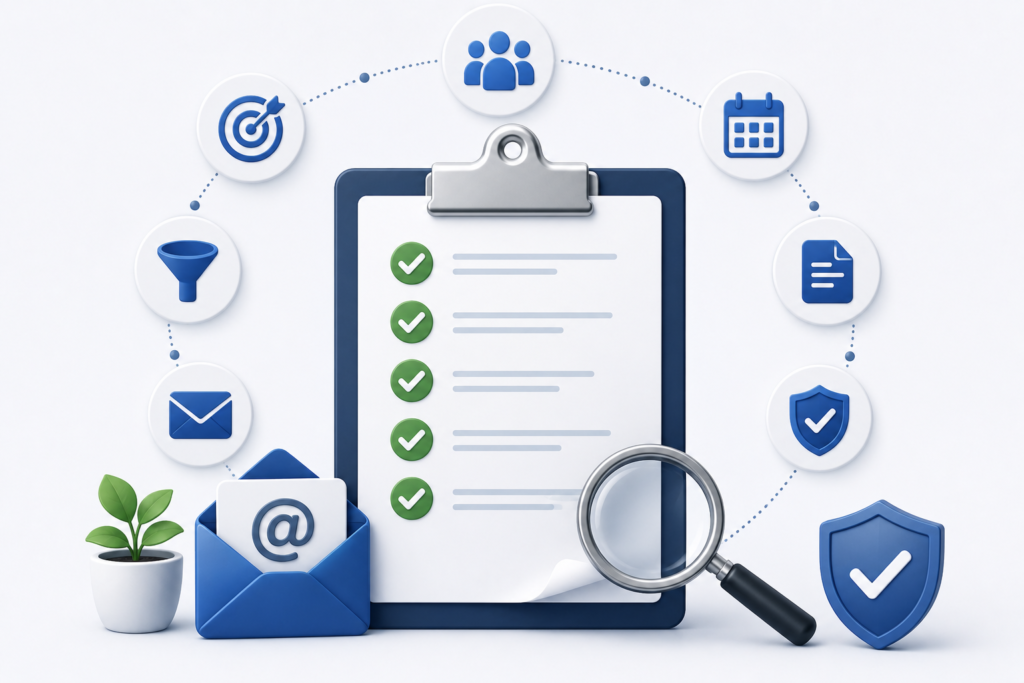
Use these directly in a call or email with the provider:
- Where did these email addresses come from, and how were they collected?
- Is this opt-in data, publicly compiled information, or modeled/appended data?
- When were these records last verified?
- Can I upload my own suppression file before you deliver the list?
- What happens to an address once someone unsubscribes from a campaign using your data?
- Can I get a sample of 50 to 200 records before I commit to the full purchase?
- What usage rights come with this list: one-time send, or ongoing use?
- Do you have a Data Processing Agreement available if the list includes EU or UK contacts?
- How do you handle CCPA deletion or opt-out requests for California residents?
- What’s your policy if the list underperforms or bounce rates come in high?
If a provider hesitates on more than two or three of these, treat that as your answer.
Test the Sample Before You Buy the Full List
Don’t take a provider’s accuracy claim at face value. Request a sample of 50 to 200 records and run it through an independent email verification tool before committing to the full purchase. A few benchmarks worth knowing:
- Hard bounce rate above 2% in your sample test signals stale or fabricated data.
- Spam complaint rate above 0.1% puts you in risky territory with major inbox providers; Gmail and Yahoo’s bulk sender guidelines treat 0.3% as the threshold where deliverability starts breaking down entirely.
- A high share of role-based addresses (info@, sales@, support@) rather than named contacts often indicates scraped or low-quality consumer data being resold as B2B.
If the sample fails these checks, the full list will fail them too, just at a larger scale.
Red Flags for Poor Email List Provider Compliance
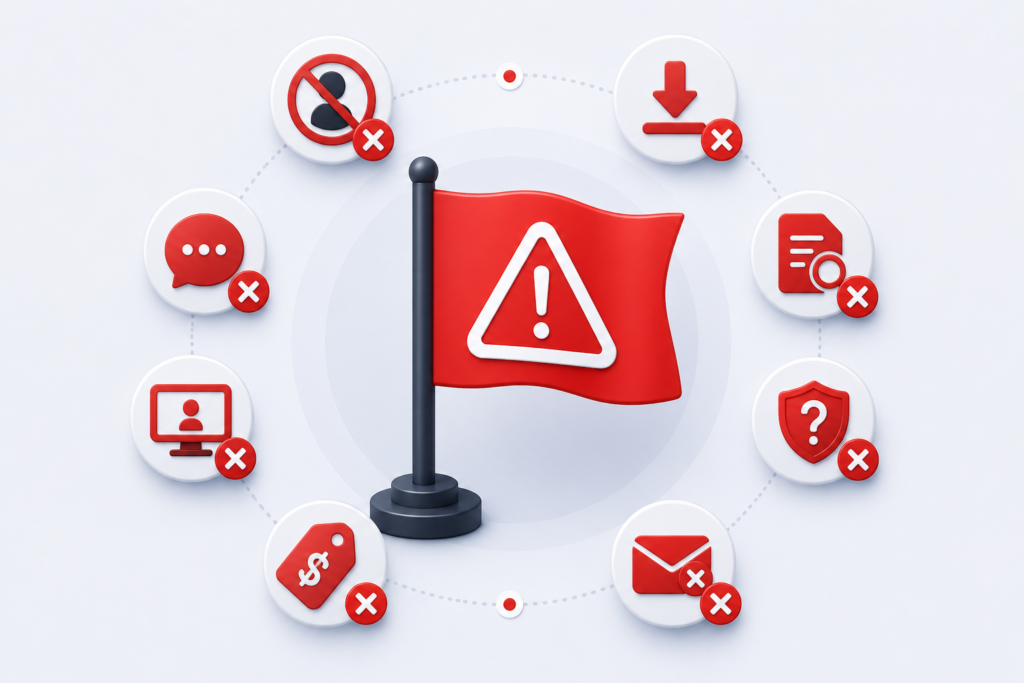
- No specific answer about data sourcing, only reassurance that the list is “compliant”
- No sample available before purchase
- No way to apply your own suppression file
- Reviews mentioning stale data, non-responsive support, or difficulty getting refunds
- Pricing that’s dramatically below comparable providers for the same volume and targeting
- No documentation for GDPR or CCPA when the list includes contacts in those jurisdictions
- Marketing language that claims the list itself makes your campaign “100% CAN-SPAM compliant,” since compliance depends on your sending practices too, not just the data source
Compliance Is Shared, Not Outsourced
Even with a well-vetted provider, the compliance responsibility for the campaign you send stays with you. The FTC has been clear that hiring a vendor, agency, or list broker doesn’t transfer legal responsibility away from the business whose product is being promoted. Vetting the provider reduces your risk. It doesn’t eliminate the requirements covered in CAN-SPAM Compliance for Purchased Lists: accurate sender information, a working opt-out method, a physical address, and suppression applied before every send.
Once you’ve vetted the list itself, the next decision is where you’re going to send it from. Mainstream platforms like Mailchimp and HubSpot won’t accept a purchased list at all, so check Email Marketing Platforms That Allow Purchased Lists before you assume your current sending tool will work.
FAQ
What is email list provider compliance? It’s the practice of verifying that a list provider sources, updates, and manages data responsibly before you buy from them. It’s not a certification you can look up. It’s a set of checks you run yourself: confirming data sourcing, freshness, suppression support, and documentation for any jurisdictions the list touches.
How do I know if an email list provider is actually CAN-SPAM compliant? There’s no official CAN-SPAM certification for list providers. Instead, verify their practices directly: ask how data is sourced and updated, confirm they support suppression file uploads, and test a sample before buying the full list.
Is it safe to buy an email list if the provider says it’s “100% compliant”? Treat that phrase as a starting point, not proof. Compliance depends on how the list was built and how you use it, not a single claim on a sales page. Ask the sourcing and freshness questions above before trusting the label.
What’s a normal bounce rate to expect from a purchased list sample? Under 2% hard bounces on a test sample is generally acceptable. Higher than that suggests the data is stale or was never properly verified.
Do I need a Data Processing Agreement from every list provider? Only if the list includes contacts based in the EU or UK, where GDPR applies. For U.S.-only B2B or consumer lists, a DPA typically isn’t required, but ask about CCPA handling if California residents are included.
Can a list provider guarantee my campaign won’t get flagged as spam? No. A provider can control data quality and sourcing. Deliverability also depends on your sending platform, your message content, your suppression practices, and your sending volume, none of which the list provider controls.